
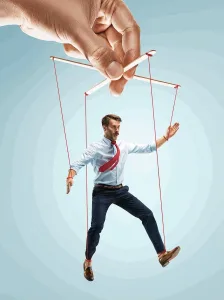
Control Often Comes from Good Intentions
Most people who try to control others don’t see themselves that way. Leaders believe they are helping their team succeed. Parents believe they’re guiding or protecting their childten. Partners believe they’re improving the relationship or helping the other person make better choices.
Yet the harder we push someone to change, the more resistance we tend to create. Over time, many people discover that trying to control others is one of the fastest ways to exhaust themselves and strain the very relationships they’re trying to improve.
But the result often feels very different to the other person.
Why Control Feels So Tempting
Control often show up when there’s a gap between what we want and what we believe is happening—a leader wanting better performance, a parent wanting better decisions, or a partner wanting more alignment. It can feel like the quickest way to close that gap is to push someone else to change. But that strategy usually backfires.
The Hidden Cost of Control
Even when control “works” in the moment, the long-term cost is high. You may get compliance, but you often lose trust, connection, or the other person’s sense of capability.
People naturally protect their autonomy. When they feel pushed, they push back. Control creates resistance; influence creates movement.
A Better Way Forward in Leadership and Relationships
Effective leaders and partners shift from control to influence, clarity, and boundaries. Influence grows when people feel respected and capable. Boundaries protect agency—yours and theirs.
A Mental Freedom Perspective
Much of our urge to control comes from confusion about what we are responsible for. Mental Freedom clarifies this distinction.
You are responsible for:
- what you do, think, and say
- your choices
- your happiness
- finding the solutions to your problems
- Your half of all your relationships
You are not responsible for:
- other people’s decisions
- their growth
- their cooperation
- their feelings
- their actions
When that boundary becomes clearer, the urge to control naturally diminishes.
I explore this idea more fully in the Mental Freedom® article Why Trying to Control Other People Is Exhausting (and What Actually Works), where I explain why control creates resistance and how influence creates far better outcomes.
What might change if you focused less on controlling others and more on strenthening the relationship?